
Criminal Cases in the Greene County Courts
Greene County uses North Carolina's General Court of Justice rather than separate county and district clerk systems. The elected Clerk of Superior Court keeps both District and Superior Court files. District Court hears misdemeanors and early felony matters, such as first appearances and probable-cause steps. Felony trials and guilty pleas ordinarily move through Superior Court. A criminal appeal from District Court generally reaches Superior Court for a new trial, called a trial de novo.
The Greene County court location page identifies the county as Prosecutorial District 9, Superior Court District 9A, and District Court District 9. Its local directory and service links help route a file request to the right desk. The official Greene court contact directory shows the clerk, magistrate, district attorney, judges, and jury contacts.
The contact directory also supplies a useful view of Greene County criminal court records and their separate custodians.
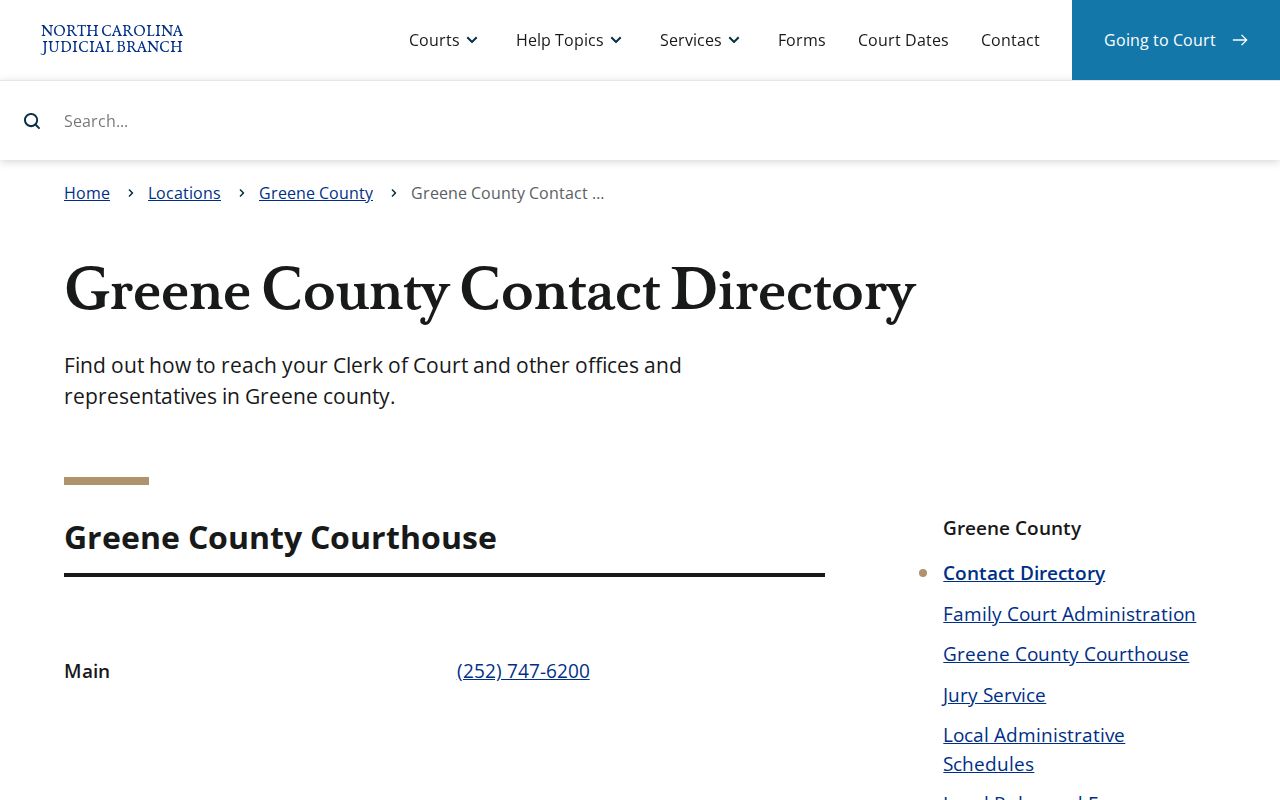
That division matters because the magistrate routes initial process, while the clerk maintains the case file used to prove the court outcome.
Greene County Criminal Court Levels
A charge label alone does not tell a reader where every hearing occurred. A misdemeanor usually remains in District Court. A felony can start there, then move to Superior Court after indictment, waiver, or another required step. The filed case may therefore show events from both levels. Court name, case number, offense class, and status should be read together.
The official courthouse profile places the public court counter at 301 N. Greene Street in Snow Hill. The clerk's public window is listed as open from 8:30 a.m. to 4:15 p.m.; the building page lists Monday through Friday hours of 8:00 a.m. to 5:00 p.m. Accessible parking is on Second Street, and an elevator reaches the clerk and courtrooms.
The courthouse profile shows where Greene County criminal case records can be inspected at their official source.
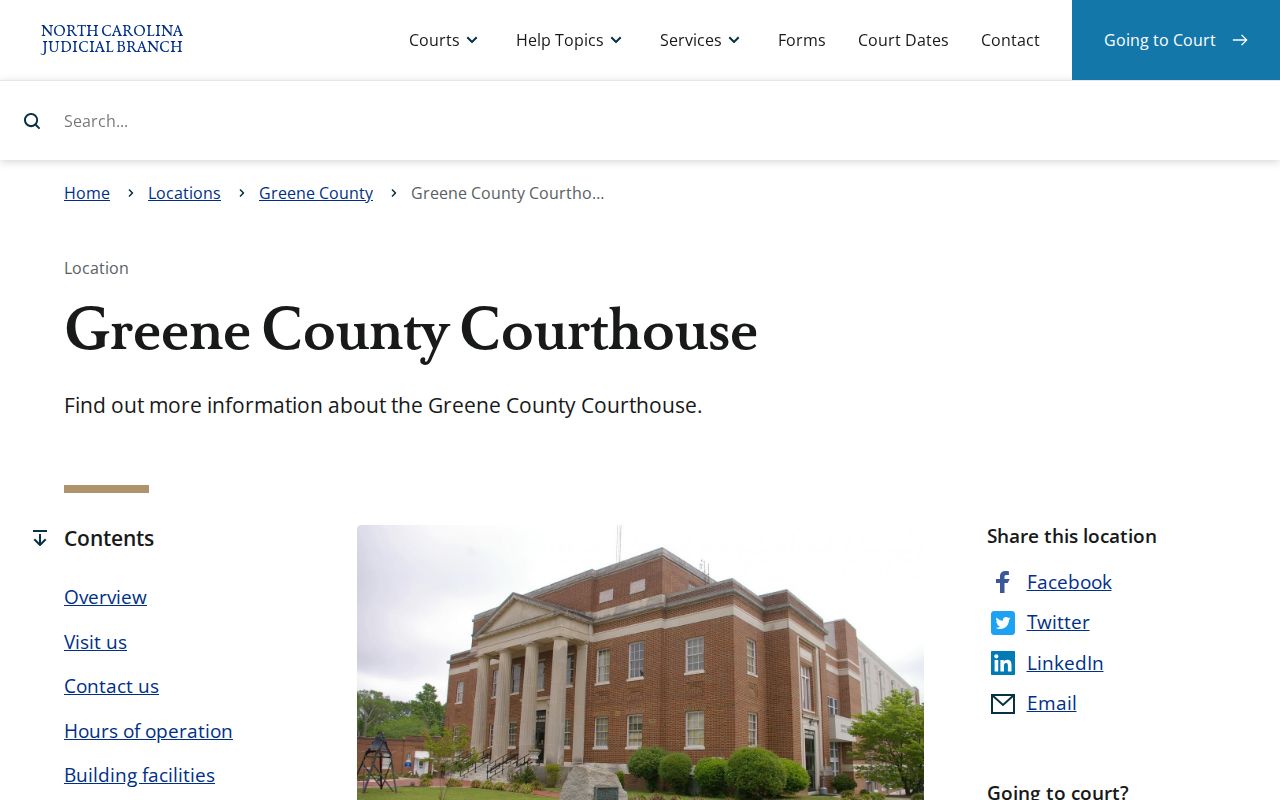
Call the clerk at 252-747-6200 before travel if a hearing, closure, accommodation, or file location could affect the visit.
How to Search Case Records
The free North Carolina eCourts Portal is the fastest first check for Greene County criminal court cases. Search by a unique case or citation number when possible. A name search works too, but spelling variants, middle initials, former names, and similar names can change the result. The Portal is not the official court record, so any result that will be used to correct a record should be checked against the clerk file.
- Open Smart Search in the eCourts Portal and choose the cases-and-records route.
- Enter a case number, citation number, or party name. Try name variants if the first query fails.
- Set the county or location filter to Greene, then use available advanced filters to narrow the match.
- Open the case and compare the court level, charges, events, status, and disposition for each count.
- Ask the Greene County clerk for the paper file, an official background search, or a certified copy when proof is needed.
| Field Label | Type | Required | Notes |
|---|---|---|---|
| Search Type | Tab or menu | One route | Choose Smart Search or cases and records. |
| Record or Case Number | Text | No | The strongest unique identifier. |
| Party Name | Text | No | Use the full legal name and variants. |
| Citation Number | Text | No | Useful for a criminal or traffic citation. |
| County or Location | Dropdown | No | Select Greene to limit statewide results. |
| Advanced Options | Expandable filters | No | Choices depend on the search context. |
Greene County Criminal Cases Online
Greene County joined the Odyssey eCourts system during Track 8 in April 2025. By October 2025, all North Carolina counties used Enterprise Justice. This change gave Greene County criminal court records a statewide search and payment layer. It did not replace the clerk, public terminal, or paper file. Portal data is a convenient index, not a certified account of the case.
The county landing page is the official starting point for Greene court services, calendars, forms, and local notices. It can help confirm whether a closure or service change affects access.
The Greene County court page illustrates the county-specific path into the statewide system. When a very new charge is missing online, check again later and call the clerk because intake, filing, and public indexing do not always occur together.
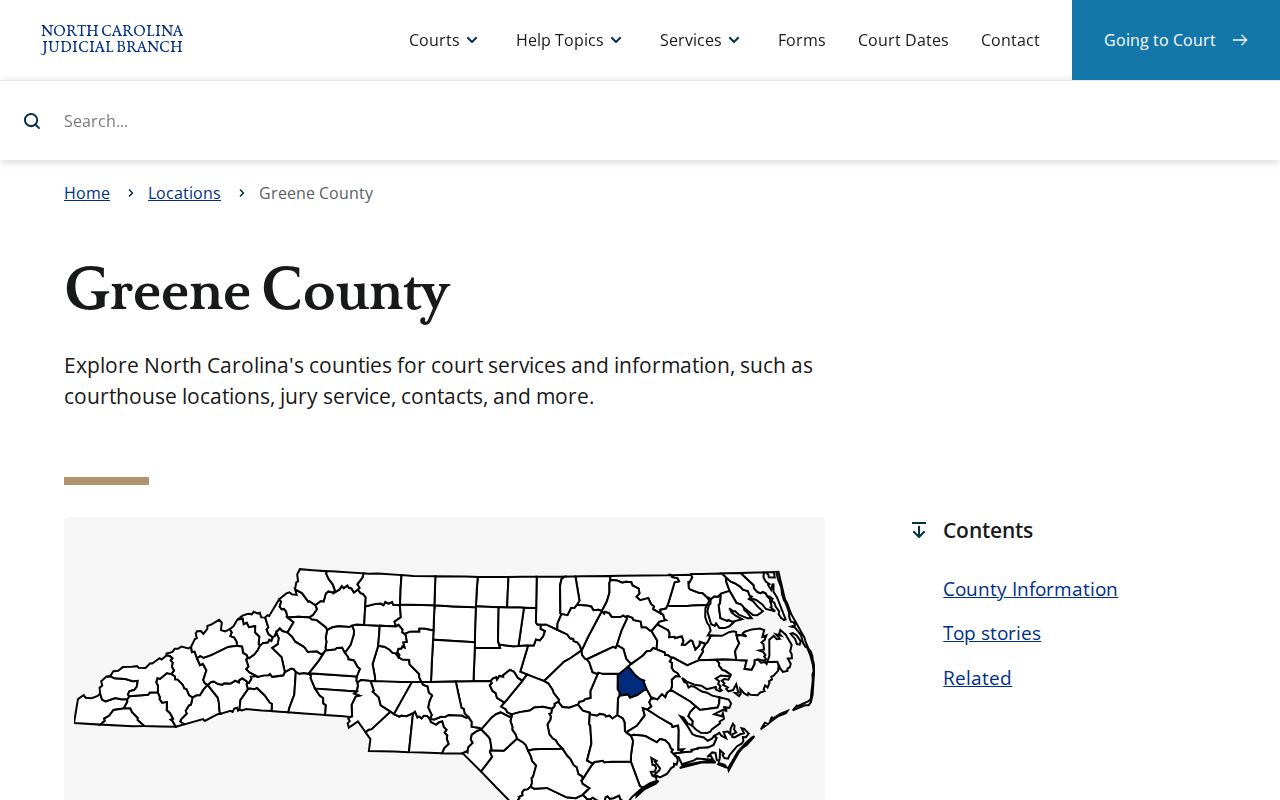
The image ties Greene County criminal cases to the Judicial Branch service layer while the clerk remains the official file custodian.
Note: A no-result Portal search does not prove that no Greene County criminal case exists.
What the Case File Shows
A Greene County criminal case file follows the prosecution, not just the arrest. The filed charge may differ from the allegation recorded at booking. Docket entries trace process, settings, continuances, pleas, trial, judgment, probation matters, and appeals. Paper or electronic pleadings can add indictments, plea transcripts, orders, and judgments, although remote document access is not guaranteed.
| Case Number & Court | Identifies the file, Greene County, and the District or Superior Court level. |
|---|---|
| Charging Document | Shows the charge filed for prosecution, its statute, class, and offense date. |
| Docket Entries | Lists process, settings, continuances, pleas, trial events, orders, and appeals. |
| Hearing Dates | Records past or scheduled events; the live calendar should still be confirmed. |
| Disposition & Judgment | Shows the result for each count and the date the court entered it. |
| Sentence & Conditions | May state confinement, probation, costs, fines, restitution, and release terms. |
Read each count on its own. One count can be dismissed while another ends in a plea or judgment. A case status is not a substitute for the disposition line.
Greene County Court File Access
The public self-service terminal at a clerk's office is the strongest free route when Portal stops short. North Carolina's Judicial Branch says terminal users may search criminal cases by defendant name, case number, or victim or witness name. Paper files must be requested in the county where they were filed, so a Greene County case belongs with the Greene clerk even when a statewide Portal search found it.
The Judicial Branch record-access instructions distinguish online viewing, terminal inspection, paper files, copies, and certified copies.
The official instructions show why Greene County criminal case access has both remote and counter-based channels.
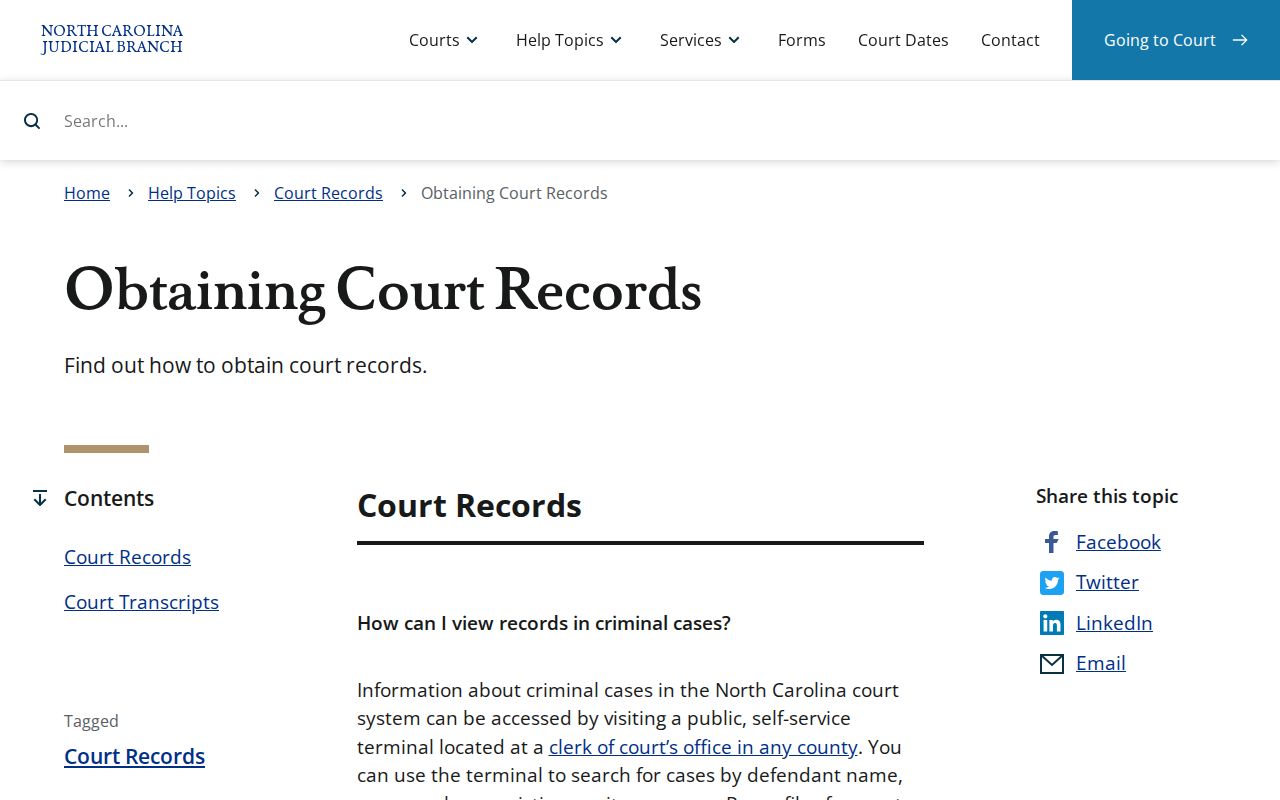
Inspection is free, while copies cost a fee. The research does not confirm current certified or uncertified per-page rates, so ask the clerk for an estimate instead of assuming a price. North Carolina also offers a separate Remote Public Access program for licensed subscription and bulk court data; it is not the ordinary route for one Greene County case file.
Stages of a Criminal Case
The court file grows after law enforcement and a judicial official have created the first arrest and process records. The prosecutor decides which charges to file and may later amend or dismiss them. District Court handles misdemeanor trials and early felony steps. A felony plea or trial ordinarily proceeds in Superior Court. The judgment and sentence then become the key court outcome that should flow back to the SBI repository.
Case flow: Charges Filed › Arraignment › Pretrial › Plea or Trial › Disposition › Sentencing
Not every Greene County criminal case follows every stage. A dismissal can end a count before trial, and a plea can avoid trial. Continuances may create several docket entries without changing the underlying charge.
Read Greene County Case Outcomes
Three labels often cause confusion: arrest charge, filed charge, and disposition. The arrest charge records what law enforcement alleged at the start. The district attorney controls the prosecution and the charge placed before the court. The disposition is the court's result for that count. These labels can differ without making the file wrong.
- Arraignment
- The stage when the charge is formally presented and a plea is addressed.
- Continuance
- A court order moving a hearing to a later date.
- Disposition
- The result of a count, such as dismissal, acquittal, or conviction.
- Judgment
- The court's formal ruling, often including sentence and costs.
- Trial de novo
- A new Superior Court trial after a qualifying District Court criminal appeal.
For a missing SBI disposition, obtain an official Greene County clerk disposition first. Then use SBI's Written Exception process. An arrest-report dispute starts with the arresting agency instead, because the clerk does not own that narrative.
Access & Restrictions
Most ordinary Greene County criminal court records are open through a terminal or paper file. Remote access can be narrower. Juvenile cases, expunged or sealed matters, victim-sensitive details, and protected identifiers are not generally exposed. A document that is absent online may still be in the clerk's file, while a record protected by law will not become public merely because someone asks at the counter.
North Carolina's Public Records Law supports inspection and copying at reasonable times, but Judicial Branch rules and case-specific confidentiality govern court files. The Chapter 132 statute index is useful context, while the clerk must apply court-access rules to the actual case. Expunction removes qualifying records only through the correct statutory process; a dismissal should not be treated as automatic erasure.
Note: Portal access may omit documents or protected data even when a public case index remains visible.
Certified Greene County Court Records
An online screenshot may be enough to locate a file, but it is not an official Greene County criminal court record. The clerk can produce a certified disposition or certified copy when authenticity matters. The clerk also offers a single-county or statewide criminal background search for a published $25 fee. That product is distinct from the free Portal and from the SBI's fingerprint-based personal Right to Review.
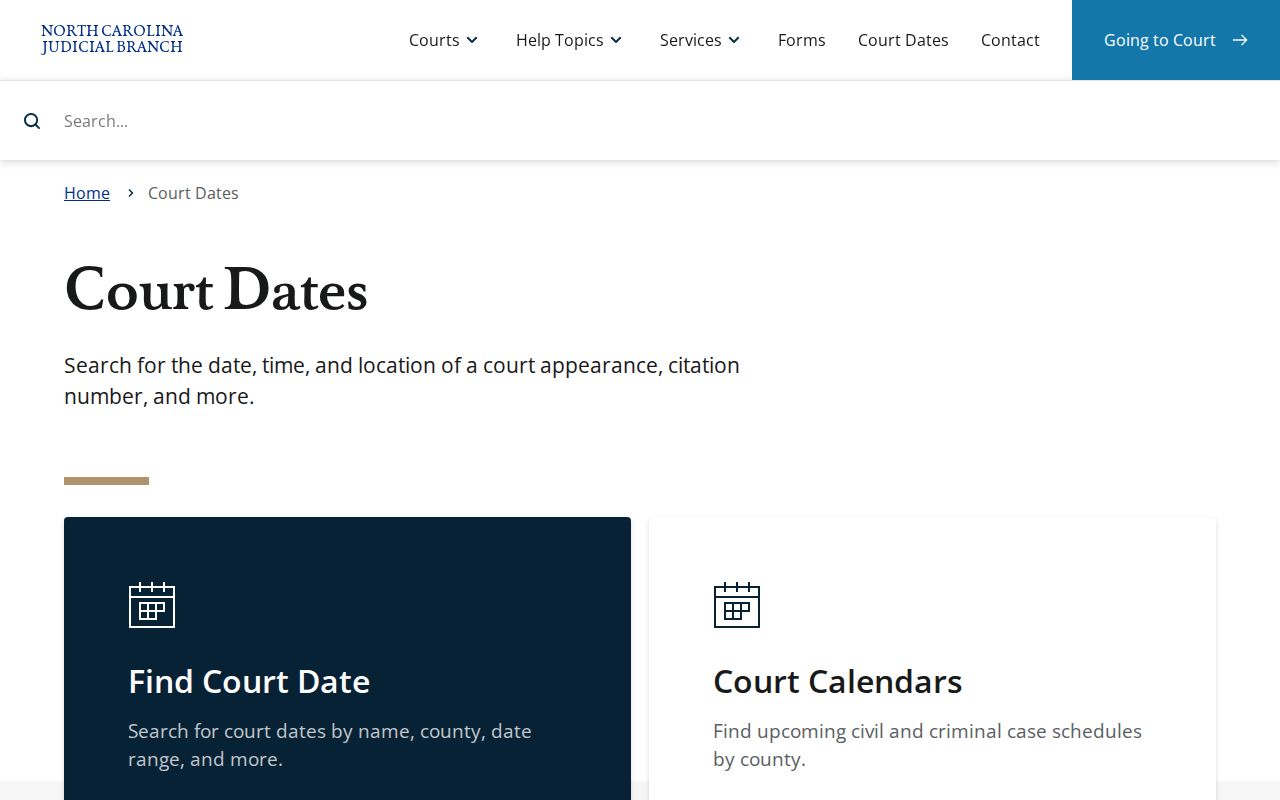
The official Court Dates search helps locate scheduled matters by name, citation, and county. It is a calendar tool, not a final outcome source.
The Court Dates interface supports timing checks for Greene County criminal cases while the case file remains the source for the final disposition.
Use the case number from the calendar or Portal when requesting copies. A precise number reduces false matches and helps the clerk find the correct District or Superior Court file.